Category: Mirror Me

  • Cedric

    Cedric

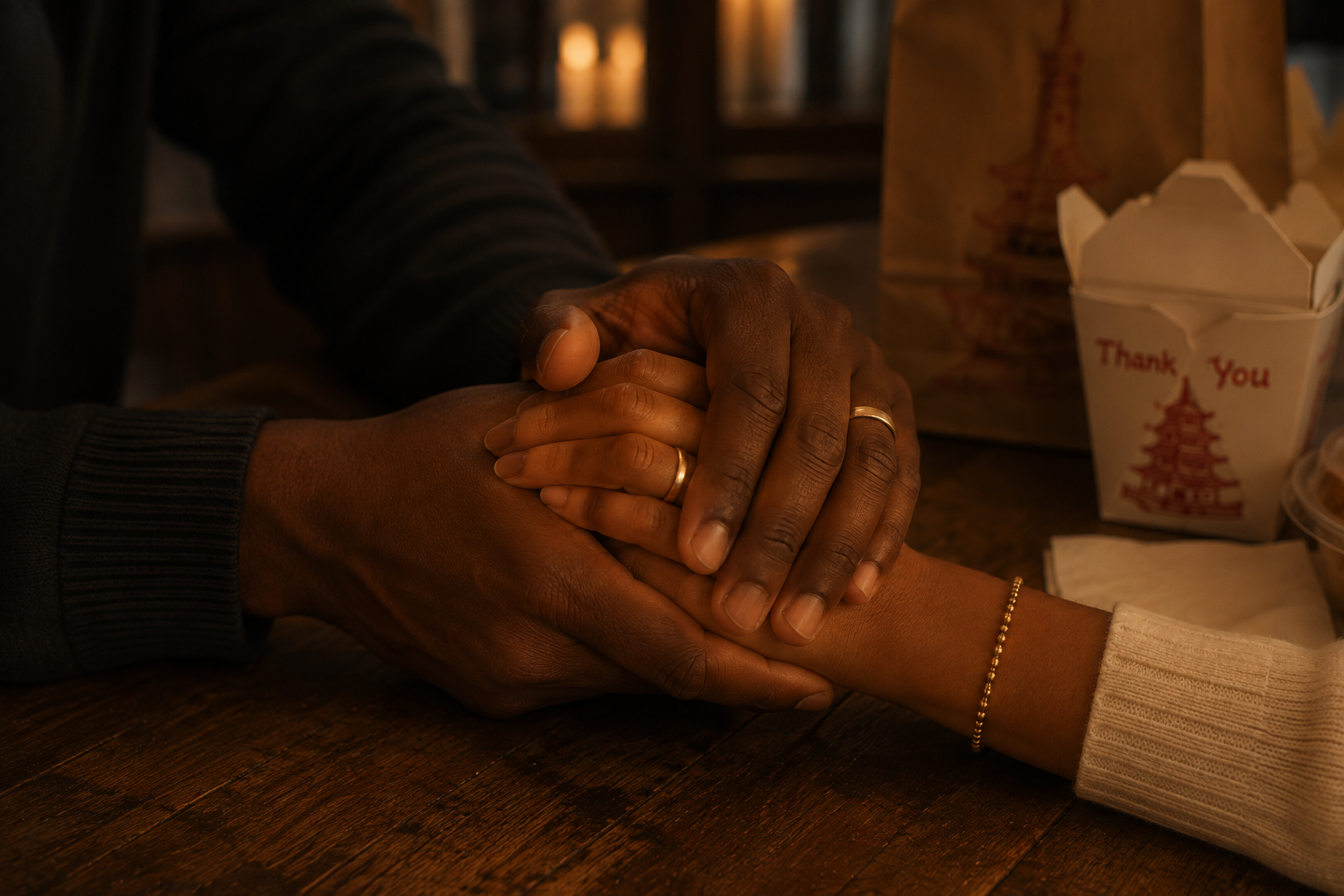
    The Husband Who Doesn’t Get in the Way

    The first draft of Cedric was a pushover. Every time Sam came to him with something impossible, he said some version of “Okay, I got it.” No pushback, no questions, no friction. I was so focused on writing a supportive husband — one who wouldn’t become an obstacle in an already hard story — that I flattened him into someone who didn’t feel real.

    So I rebuilt him. The Cedric in the book now has fear. He has anger, just never at Sam. He disagrees with her. They don’t argue — they have hard conversations that end in a decision, not a fight. He tells her when he’s not happy. And by the end of the book, he protects the house, literally.

    There’s a scene at the end of Chapter 11 that’s the clearest window into who he is. Sam is upstairs reading Birdie’s journal, learning that at the vibration site ceremonies, the men never entered the circle — they held the perimeter. Protectors, not participants. She hears Cedric come in downstairs, and it hits her: he’s been doing exactly that. Holding the line around her, securing her, without ever knowing what he was protecting her from. He didn’t need to know. That’s the moment she decides to show him the library.

    That scene is where I tied Cedric to the book’s larger architecture — Heart, Fire, Shadow, Wisdom, the postures the women in this family inherit and have to learn to balance. Cedric isn’t holding a stone. He’s holding the ground the stones sit on.

    I know some readers will read all this and think no marriage is that easy — that a husband who communicates, doesn’t obstruct, and quietly guards the perimeter without demanding explanation sounds more like a fantasy than a character. And it’s fair to sit with that reaction, because I wrote him partly as a demonstration, not just a description. So many of us walk around dysregulated, in relationships that aren’t balanced, without a clear picture of what balance actually looks like day to day. Sam recognizing Cedric’s protection in Birdie’s journal is the same recognition I want for the reader: the moment you realize someone has been quietly anchoring you, doing the work of showing up without asking what’s wrong, just being the shoulder you rest your head on after a hard day.

    If this book does nothing else, I want it to make readers ask: do I have that? Is someone doing that for me — or am I doing it for someone else without being asked?
  • The Four Stones

    The Four Stones

    One of the central ideas in Mirror Me revolves around four stones.

    In The Four Stones

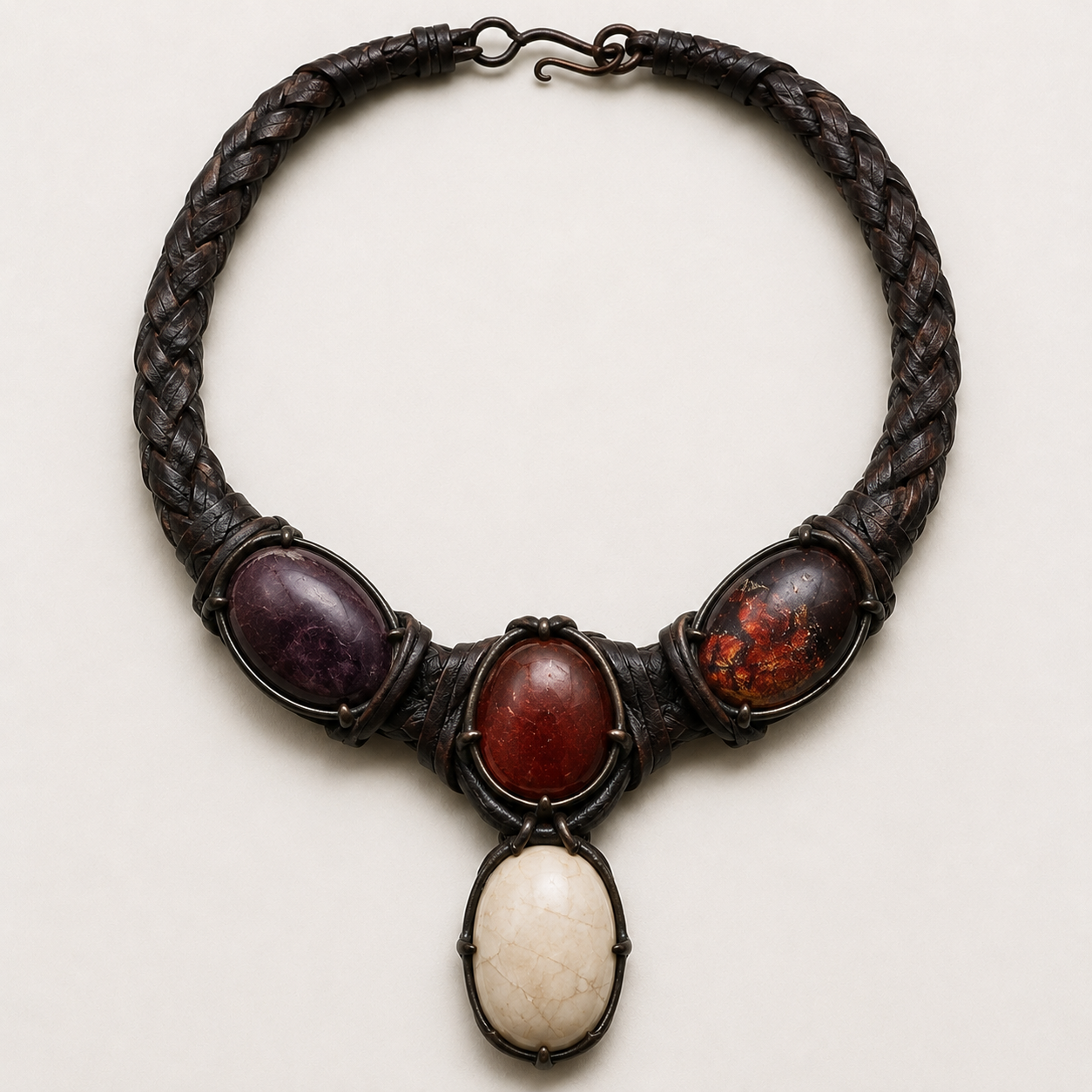
    In Mirror Me, Sam discovers a sketch of a necklace. Around it are four circles, The Four Stones

    In Mirror Me, Sam discovers a sketch of a necklace. Around it are four circles, each representing a stone. Beside them, Birdie has written four words:

    Heart. Flame. Shadow. Wisdom.

    At first, the stones seem symbolic, but Birdie’s journals reveal something deeper.

    Flame — the posture that burns to hold everything together.

    Shadow — the posture that disappears to stay intact.

    Heart — the one who gives until she is emptied.

    Wisdom — the one who waits, who studies, who remembers when urgency tries to scatter her.

    Then comes a sentence that becomes one of the guiding ideas of the novel:

    The land responds to posture, not intention.

    That distinction matters.

    Most of us believe we’re defined by our intentions. We want to do the right thing, love well, protect our families, and stand up for what matters.

    But Mirror Me asks a different question.

    How do you stand when life becomes difficult?

    Not what you hope to do or the kind of person you want to be.

    How do you actually respond when you’re carrying too much?

    For some, the answer is Heart.

    They love deeply and care for everyone around them. They give and give until they forget that even the vessel doing the pouring needs to be filled.

    Others lead with Flame.

    Flame is courage, but it is also control. It refuses to back down, determined to hold everything together through sheer strength. Yet fire left unchecked can leave ashes behind, even when its purpose was good.

    Others retreat into Shadow.

    Shadow shrinks to preserve peace. It stays quiet and avoids conflict. Sometimes that’s wisdom. Sometimes it’s survival. But when disappearing becomes the only way we know how to protect ourselves, we slowly lose sight of who we are.

    Then there is Wisdom.

    Wisdom watches before it speaks. It remembers, studies, and considers the long view. But even wisdom can become unbalanced when knowledge turns into certainty and certainty becomes arrogance.

    None of these postures are inherently good or bad.

    They’re all necessary.

    The problem comes when we begin living from only one of them.

    Throughout Mirror Me, the four stones remind us that strength isn’t found in Heart alone, or Flame, Shadow, or Wisdom.

    Strength comes from balance.

    As I continued writing, another question became increasingly important to me.

    Why do you naturally lead with the posture you do?

    Is it simply your personality?

    Or is it something you learned?

    Did your mother teach you to disappear to keep the peace?

    Did your grandmother teach you to carry everyone else’s burdens before your own?

    Did someone before them learn those same lessons because the world required it?

    That’s what Mirror Me explores.

    The story isn’t asking readers to identify which stone they are.

    It’s asking them to wonder where that posture began—and whether it’s something they want to continue passing on.


    Mirror Me Launches February 2027

  • What I Refused to Compromise On 

    What I Refused to Compromise On 

    What I Refused to Compromise On

    What I Refused to Compromise On

    If there’s one thing I refused to compromise on while writing Mirror Me, it was this:

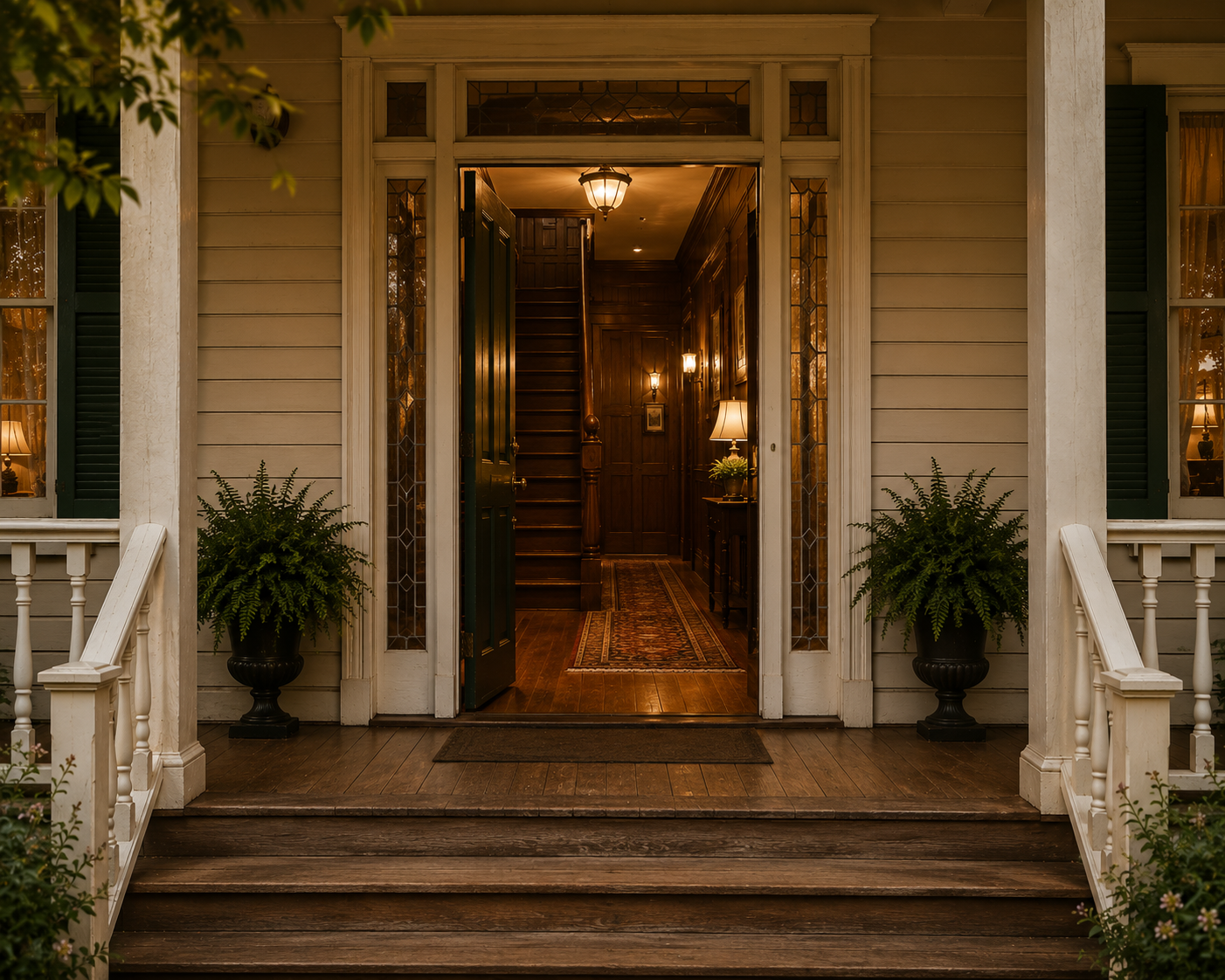
    This is a story about a Black family.

    The racial tension they experience is real, and it was important to me to write about it honestly. But it was equally important that this family not become another stereotype.

    When I was growing up, I lived in two very different worlds.

    On one side was Roosevelt, where we spoke with more slang, carried ourselves differently, and blended into the neighborhood around us.

    On the other side was Westbury, where my grandmother expected us to speak proper English, value education, and know how to carry ourselves in predominantly white spaces. She wasn’t trying to make us less Black. She was preparing us to survive in a world that often judged us before we ever opened our mouths.

    My sisters and I learned to code-switch very early.

    But that also meant we stood out.

    We were called names because we didn’t speak the way some of our classmates did. We didn’t always fit neatly into what people expected Black children to sound like or act like.

    That experience stayed with me.

    When I started writing Mirror Me, I thought about how many people like me rarely see themselves represented accurately in books, movies, or television.

    People who are fully Black, who understand Black culture, but who also learned to navigate predominantly white spaces.

    People whose experiences don’t fit neatly into the versions of Black life we’ve seen portrayed for decades.

    I wanted the Gaines family to feel like real people.

    Each member has a distinct personality. They don’t all speak the same way, react the same way, or see the world through the same lens. They’re proud of who they are, but I wasn’t interested in making them perform Blackness according to someone else’s expectations.

    For a long time, media treated Black characters as though they belonged in the same mold. The Black woman was the nanny. The Black man was the butler. Later, different stereotypes replaced those, but they were still stereotypes.

    Blackness is not a monolith.

    I didn’t attend an HBCU. I wasn’t part of a sorority. My husband wasn’t in a fraternity. Those experiences are part of Black culture, but they aren’t mine, and I wasn’t going to pretend otherwise.

    I wrote the family I know.

    The people I grew up with.

    The people who raised me.

    It was also important to me that the family be whole.

    At one point, I considered making Sam’s mother a single parent. Then I stopped myself.

    Why?

    Why couldn’t her parents still be married? Why couldn’t they simply be an older couple who had built a life together?

    There are enough stories that reinforce the stereotype of absent Black fathers. I didn’t want to contribute to that simply because it was familiar.

    I wanted to show a complete family.

    Not a perfect family.

    A complete one.

    And underneath all of this was another decision I’d made about the story.

    I refused to center whiteness.

    It exists in Mirror Me because it exists in life. Sam navigates racial tension, microaggressions, and assumptions people make about her. Those experiences are part of her world, and I wasn’t going to ignore them.

    But Mirror Me isn’t about white people.

    It isn’t about explaining racism.

    It isn’t about making white readers comfortable.

    It’s about a woman who happens to be Black, her family, her history, and the things she discovers about herself.

    I wanted readers to know the Gaines family as people first. To recognize their personalities, their relationships, their disagreements, and the love they have for one another.

    At the end of the day, that’s what I refused to compromise on.

    I wanted this family to be real.

    Human.

    Not a trope.

    Not a stereotype.

    Just people…

    …who happen to be Black.

    Mirror Me Launches February 2026

  • When Mirror Me Became More Than a Story 

    When Mirror Me Became More Than a Story 

    It Started as a Story

    I can’t point to one specific moment when Mirror Me stopped being just a story and became something more.

    It began with an idea I wanted to explore. I thought it would make a good story.

    But as I dug into the emotional layers of the book, particularly what it means to live with the different postures, I began examining myself and the people around me.

    I recognized those postures in myself, my sisters, and my mother. Then I started noticing them in other women.

    The more I listened to women tell their stories, the more familiar those patterns became.

    Women’s Voices

    We live in a patriarchal society, and throughout history, women’s voices have often been quieted. Not completely silenced, but certainly not celebrated or amplified the way they should have been. We’ve been taught to carry our pain quietly, to endure, and to keep moving.

    And I began to see how those expectations shaped the women around me.

    Some women shrink themselves to keep the peace.

    Others are taught that their value comes from how much they give. They pour into their families, their children, and their communities, often leaving very little for themselves.

    Some lead with fire. They’ve learned that to be successful, they must be tough enough to fight for everything. Somewhere along the way, they were taught that strength and softness couldn’t exist together.

    And then there are women who have gained wisdom through years of living, learning, and surviving, only to find that their voices still aren’t heard until much later, if they’re heard at all.

    These weren’t just fictional postures anymore. I was seeing them everywhere.

    More Than Sam’s Story

    As I continued writing, I realized Mirror Me wasn’t just telling Sam’s story.

    I wanted women to recognize something of themselves in it.

    To ask questions like:

    Why do I respond this way?

    Why do I handle conflict like this?

    Where did I learn that?

    Is this really who I am, or is it something that was handed to me?

    I hadn’t expected to be asking myself those questions when I started writing.

    Another Layer

    And then there’s race.

    Black women carry another layer of history and expectation that shapes how we move through the world. That matters in Mirror Me, and I wasn’t interested in pretending otherwise.

    But I also believe that, regardless of race, every woman has inherited something she didn’t choose.

    Sometimes it’s a belief. Sometimes it’s a fear. Sometimes it’s a way of protecting herself that she learned long before she understood why she needed it.

    And sometimes she passes it on without realizing it.

    Looking in the Mirror

    That’s why this story became important to me.

    It began as a story about one woman and her family. Somewhere in the writing, I began to see the women who raised me, the women I grew up alongside, and the women I’ve become acquainted with over the years.

    And I began to recognize myself.

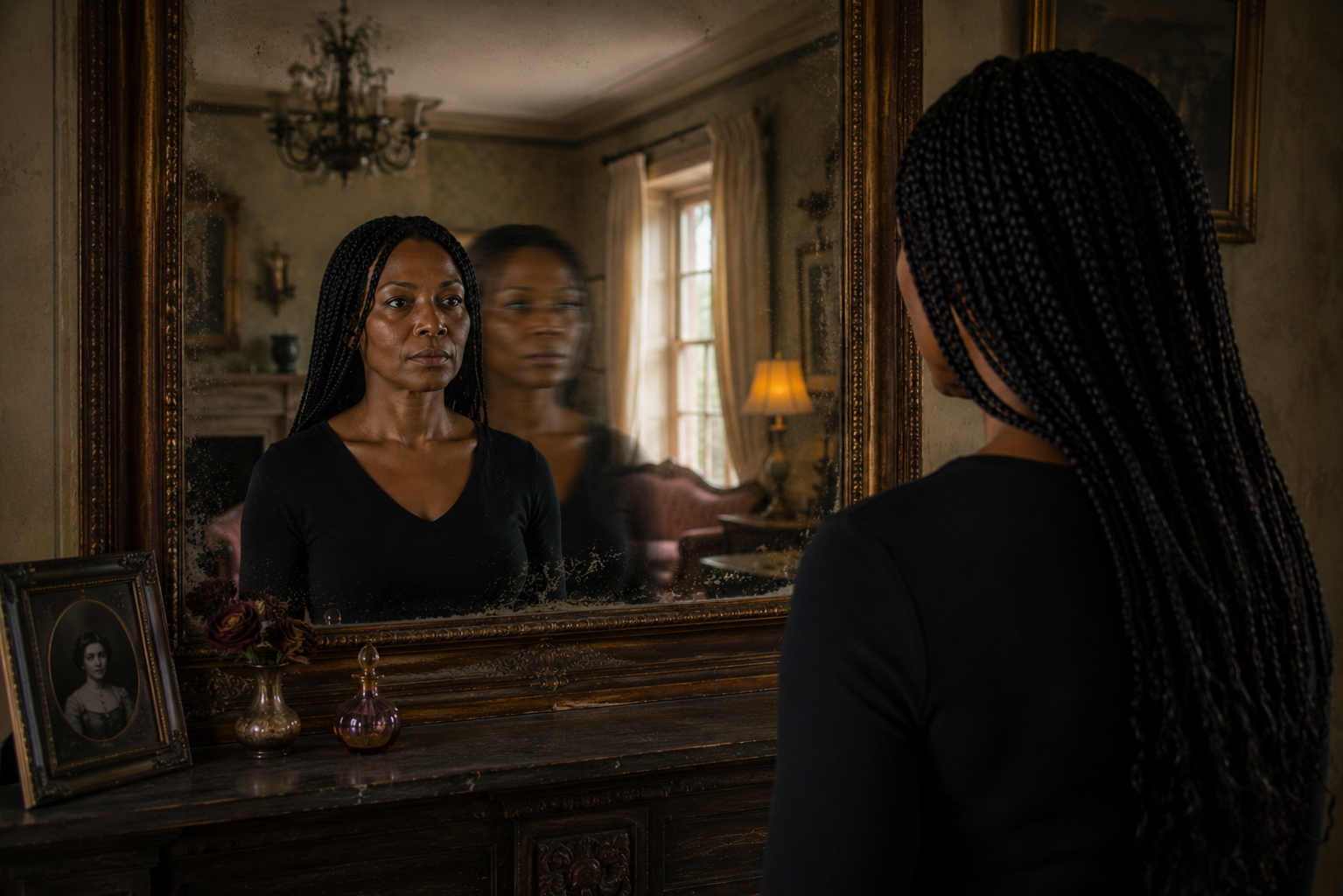
    Mirror Me became an invitation to look in the mirror and ask why we stand in the posture that we do.

    I think that’s a question worth asking.

    Mirror Me launches February 2027

  • Why Birdie Became an Archaeologist 

    Why Birdie Became an Archaeologist 

    One of the questions I’ve been asked is why I made Birdie an archaeologist. 

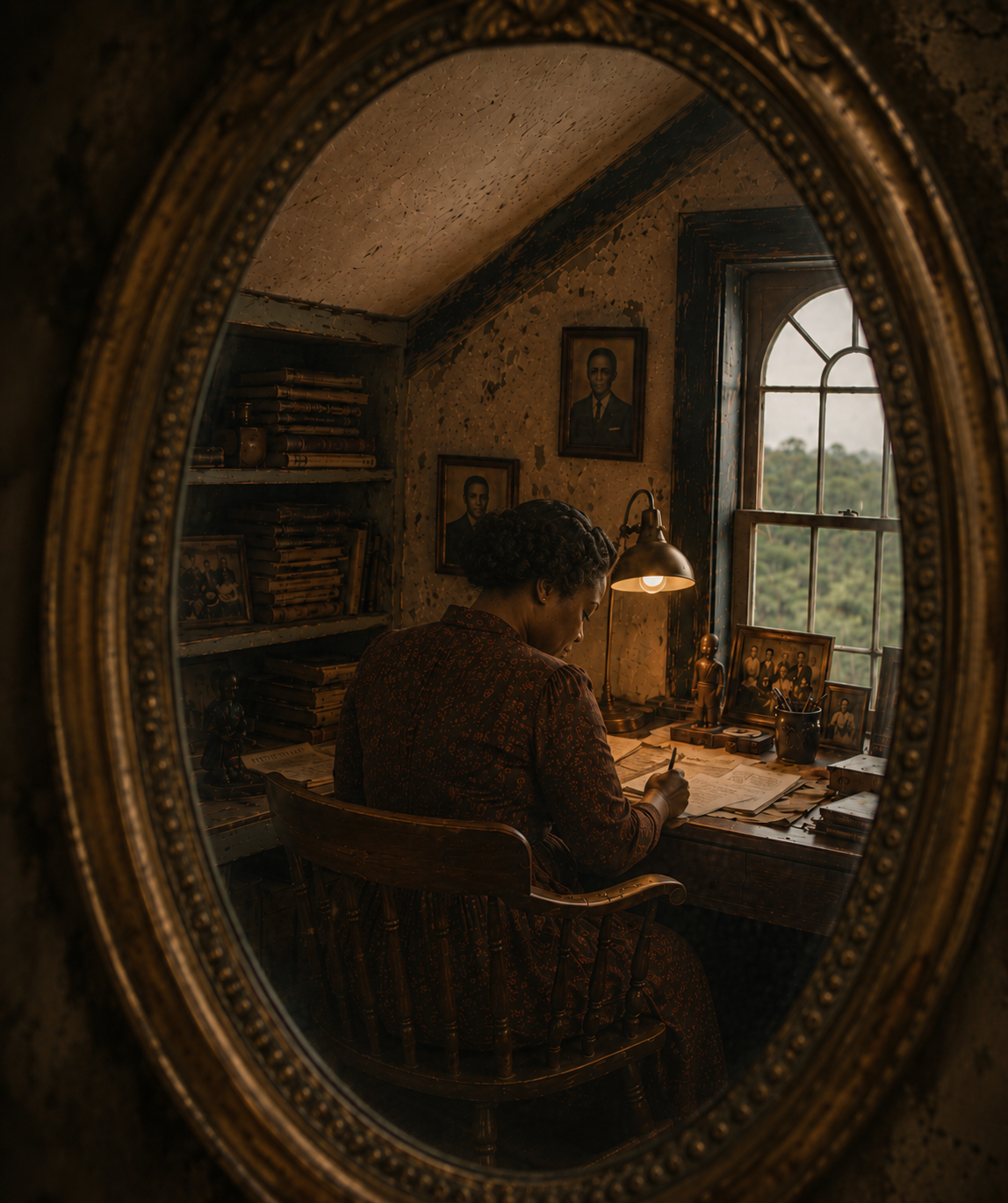
    The simple answer is that Birdie needed to unlock the lore of the story. 

    Mirror Me has a long history behind it, and I didn’t want to spend hundreds of pages telling that history from beginning to end. Birdie became the vehicle that allowed both Sam and the reader to understand what came before without stopping the story to explain everything. 

    An archaeologist asks a simple question: 

    Who was here before us? 

    That’s exactly the question Birdie spends her life trying to answer. 

    She travels the world researching Indigenous peoples, ancient cultures, and places where the earth itself seems to hold memory. Through that research, she begins connecting what exists on Sam’s land with similar places around the world. Most people would never make those connections. They come through years of research, travel, documentation, and curiosity. 

    Birdie needed to be someone who was naturally curious. But curiosity wasn’t enough. She also needed the means to travel, the resources to spend years researching, and the freedom to dedicate her life to those questions. Because she never married and never had children, she was able to devote herself completely to that work. 

    In many ways, I think of Birdie as a female Indiana Jones. Not because she’s swinging from ropes or outrunning boulders, but because she’s driven by the same desire to understand the people who came before us and what they left behind. 

    More than anything, though, Birdie is a steward of memory. 

    She remembers her family. 

    She remembers the land. 

    She remembers the history that would otherwise be lost. 

    Her journals become the bridge between what was and what is. 

    They give Sam the information she needs without simply handing her the answers. Birdie is careful about what she records and careful about what she leaves for Sam to discover on her own. 

    From a storytelling standpoint, making Birdie an archaeologist also gave her credibility. When she writes about the vibration sites and the history behind them, the reader believes she has earned that knowledge. Her research makes the larger world of Mirror Me feel believable because it doesn’t begin with Sam. It has always existed. Birdie simply spent her life uncovering it. 

    One of the things I love most about Birdie is that, even though she never appears on the page in the present day, many readers tell me she’s one of their favorite characters. 

    I understand why. 

    She’s wise without being mysterious. 

    She’s plain-spoken without talking down to people. 

    She never pushes Sam toward the answer. She simply leaves the path lit and trusts her to keep walking. 

    In the end, Birdie isn’t just the catalyst for Sam’s journey. 

    She’s the steward of a story that has always belonged to the land. 


    Mirror Me Launches February 2027

  • How Mirror Me Was Born

    How Mirror Me Was Born

    This book started with a phone call, not an outline.

    It was November 2025, and my daughter, my second oldest, called to confirm Thanksgiving plans at her grandmother’s house. Partway through the conversation, she paused and said, “Mommy, I want to ask you something. I’m hoping you’ll be okay with it.” She’s been with her boyfriend for years now, a genuinely wonderful young man. She asked if she could spend Christmas with him and his family instead of with us.

    It’s a small thing to type out.

    It didn’t feel small.

    What stayed with me wasn’t the request itself, I always knew this day would come. It was the care she took asking it. She knows how family-oriented I am, how much togetherness matters to me. She thought about my feelings before she made her plans. And this is my fire daughter. The one who calls things what they are, who doesn’t usually pause to soften an edge. In that moment, she set the fire down and led with heart instead.

    I told her yes, of course, he’s her person now, and there will be more Christmases like this one. But after we hung up, I sat with it. I started thinking about how something in me had clearly imprinted itself on her, in a moment she didn’t even realize was doing it. And then I started thinking about my other daughters, and how each of them carries a different piece of me the same way, leaning into a different posture, reflecting a different side of who I am, out into their own lives.

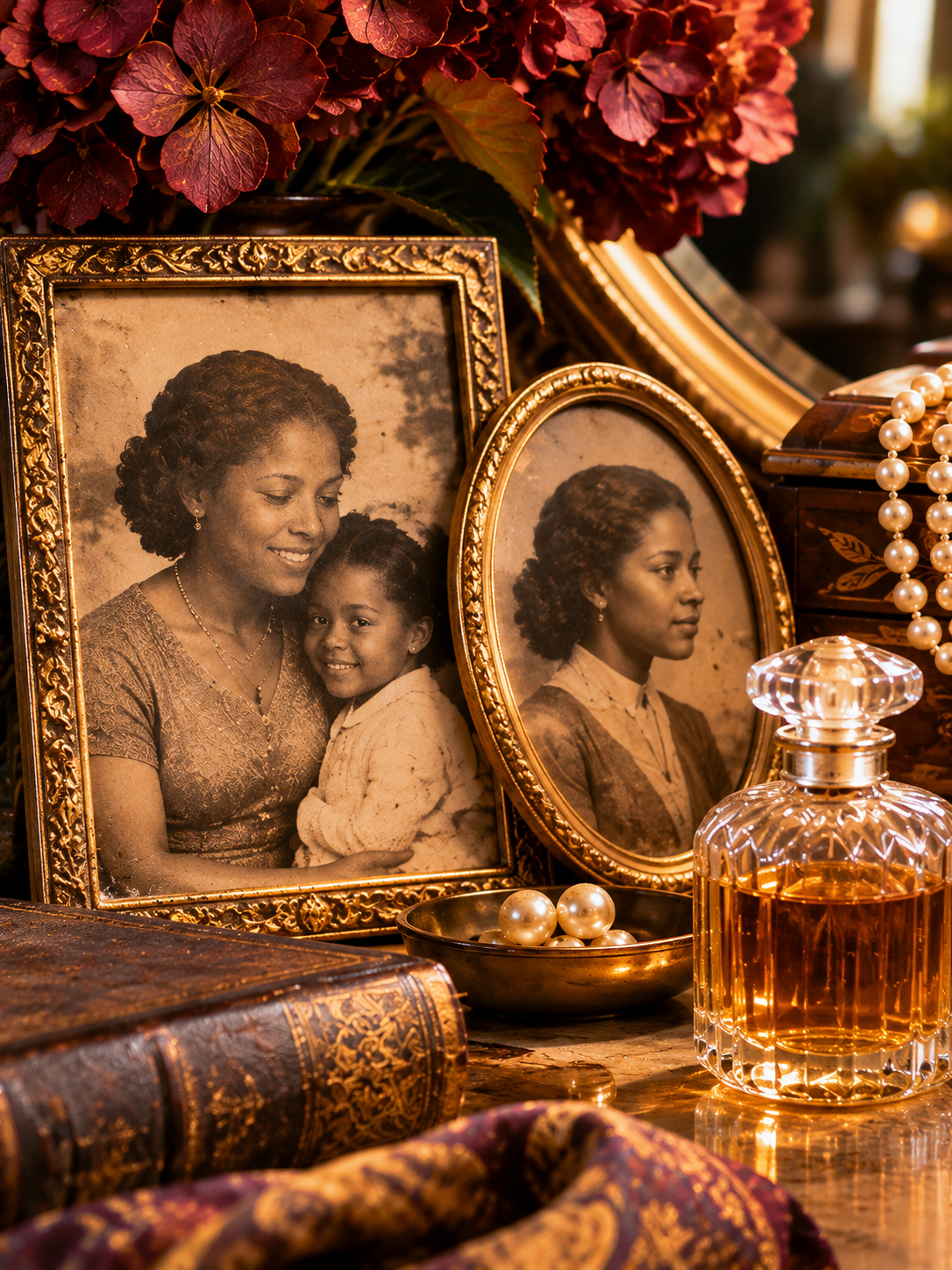
    That’s the whole book, really, before it had a plot. A piece of you goes out into the world in your children, whether you meant to put it there or not. Mirror Me.


    Mirror Me launches February 2027

  • The Version of Mirror Me That Almost Was 

    The Version of Mirror Me That Almost Was 

    One of the things people may not realize is that Mirror Me wasn’t always the story it is today. 

    The original version was much more of a science fiction story. It wasn’t really about Charlotte. It wasn’t about the Whittaker family. It wasn’t even about history. At its core, it was simply about a mother trying to understand the different parts of herself that she saw reflected in her children. 

    That idea has never changed. 

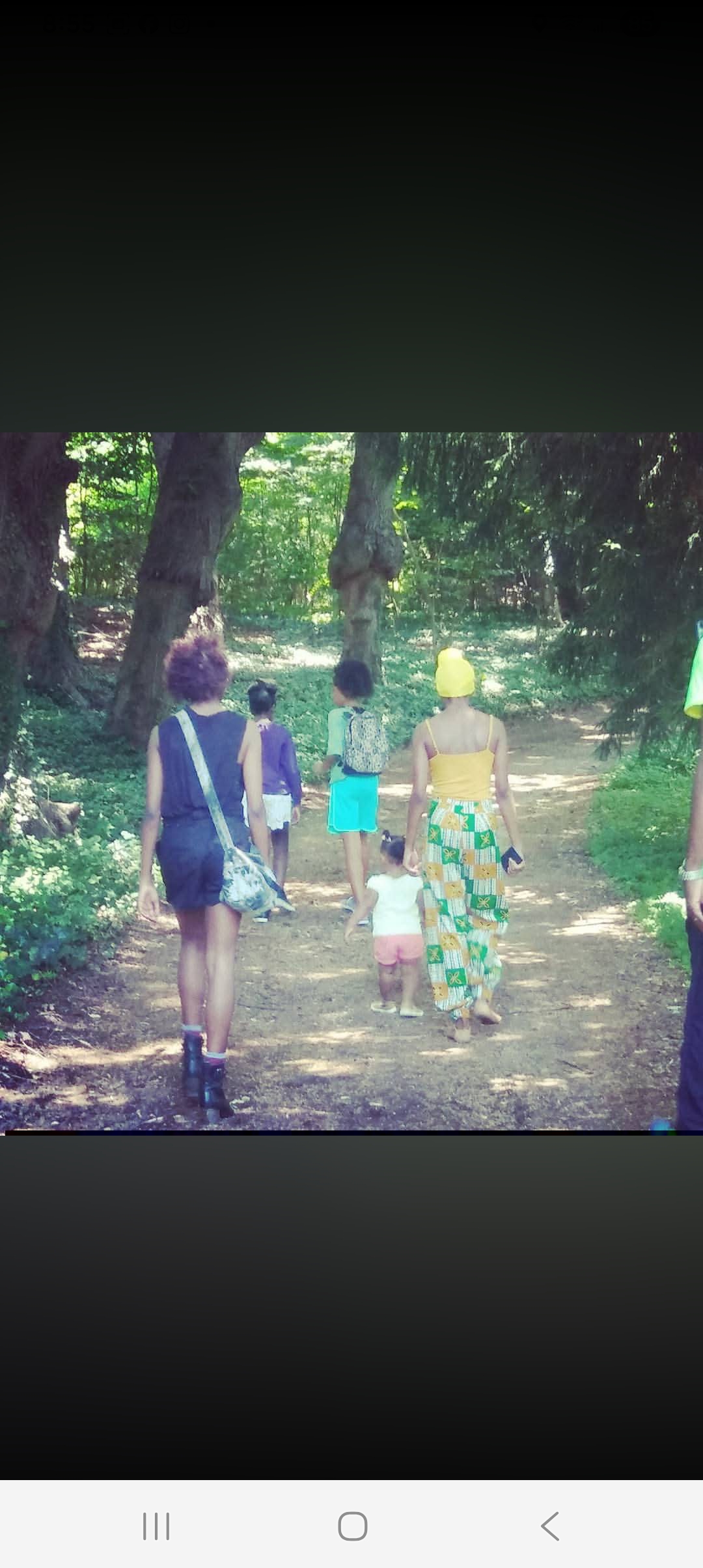
    I’ve always said that my four daughters are different sides of me. They each carry different parts of my personality, and I wanted to tell a story about what it means to send those pieces of yourself out into the world. 

    Originally, the house was simply a metaphor for that idea. 

    Inside the house were different rooms, and each room represented one of the children’s postures. The mother would enter a room and complete a trial before she could retrieve something connected to that child. 

    I actually wrote some of those scenes. 

    One room represented Heart. The mother walked into what had become a lagoon. In the middle sat her daughter on a stone, crying. Her tears flowed into the water below, feeding every plant growing around her. The entire room was alive because of her sorrow. The trial wasn’t defeating anything. It was convincing her daughter to step off the stone and come home. 

    Another room represented Fire. It was a burned-out city where her daughter wandered through the streets setting fires, almost enjoying the destruction around her. 

    The shrinking room eventually became Shadow, and that idea actually survived into the final version of Mirror Me. 

    The whole story was strange. It leaned heavily into science fiction and symbolism, and the more I built it, the stranger it became. 

    Eventually I had to stop and ask myself a simple question. 

    What story am I actually trying to tell? 

    That question changed everything. 

    I realized I wasn’t trying to write about supernatural rooms or elaborate trials. I was trying to write about mothers, daughters, inheritance, and the different emotional postures we pass from one generation to the next. 

    The message became more important than the mechanics. 

    That’s when I stopped building scenes and started building lore. 

    Instead of asking what happened inside the rooms, I started asking bigger questions. 

    Who are these people? 

    Why are they here? 

    How did this family get here? 

    Where did the stones come from? 

    Why this house? 

    Why this land? 

    Once I started answering those questions, the story transformed. 

    The objects the mother originally retrieved became the stones of the necklace. The rooms gave way to history. The house stopped being just a metaphor and became a place with generations of memory. The supernatural remained, but now it had a purpose instead of simply existing because it looked interesting. 

    Looking back, Mirror Me could have stayed on the shelf for a very long time if I hadn’t stopped to rethink what I was really trying to say. 

    Sometimes the best thing you can do as a storyteller isn’t write the next chapter. 

    Sometimes it’s stop long enough to ask yourself what story you’re actually trying to tell. 


    Mirror Me launches February 2027

  • What Am I Afraid Of?

    What Am I Afraid Of?

    What am I afraid of?

    I think it’s the same thing that keeps most people from taking a leap of faith.

    That they’ll fall.

    But if there’s one thing I’ve learned over the years about taking a leap and about falling, it’s that you can get back up.

    This venture of becoming a writer is something I’ve wanted for longer than I’ve even known my husband. There has always been something in me about storytelling. I’ve always felt it was there.

    I never really got the opportunity to pursue it seriously. I’m not mad about it. It just didn’t happen.

    And now, here I am in the second half of my life.

    What I’m afraid of…

    …is not being good enough.

    But I think that’s everybody’s fear, right?

    We don’t take chances because we’re afraid we’ll fail. We’re afraid we’ll fall flat.

    What I’m learning about life is that, yeah… it’s probably going to happen.

    There will be failures.

    There will be faux pas.

    There will be mess-ups.

    There will be slip-ups.

    But none of that means you don’t take a step.

    It doesn’t mean you don’t take the leap.

    Being afraid is part of the human condition.

    Walking into the unknown is part of daily life. We don’t know what’s going to happen from one day to the next.

    But if there’s a door to be opened…

    Walk through it.

    I’m learning that I’m walking into this afraid.

    And fear isn’t anything to be ashamed of.

    Fear is part of it.

    People say that Sam Gaines is brave.

    I don’t know that she’s brave.

    I think Sam Gaines is simply walking through the doors that are opening to her and seeing what’s on the other side.

    That’s how I’m walking into this whole era of being an author. This second act, whatever you want to call it.

    The doors of my mind opened up and allowed me to start writing again.

    I’m going to walk through them.

    Let’s see what’s on the other side.

    What am I most afraid of?

    Not walking through the door.

  • I’m Not Angry, I’m Thinking

    I’m Not Angry, I’m Thinking

    The thing people get wrong about me the most is that I’m angry all the time. I think it’s hilarious.

    I tend to be really introspective, and I guess sometimes that shows on my face. Maybe it’s just resting-you-know-what face. I don’t know. I take my time, and I’m thoughtful about how I want to say what I want to say. People often mistake that for me being angry or upset about something.

    I’m not.

    As I’ve gotten older, I want to really think about how I respond to things. So many people just spout off. They say whatever comes to mind without really considering the impact of what they’re saying or how someone else is going to respond. I’m processing all of that while I’m talking, while I’m thinking through what I’m going to say.

    I try to tell people, “I’m not angry. I’m just thinking.”

    Sometimes I talk very fast. Other times, when I’m processing, I slow down because I’m trying to find the right words to land in the conversation so they don’t come across the wrong way.

    I think people are always so quick to get to the end that they don’t take the time to think about the middle. I’m in the middle trying to process how to get to the end and have the right end to the conversation.

    That’s why I laugh about it. It really is the thing people get wrong about me the most.

    I get very passionate about what I believe in. I’m passionate about the things that excite me, and people often mistake that for aggression or anger. It’s not. It’s excitement. Maybe it’s the tenor of my voice. I don’t know. But I often find it hilarious that people think I’m angry when I’m just passionate.

    Weird how passion gets exchanged for anger.

    And I don’t just mean at work. I mean everywhere. I can be overly excited. I talk with my hands. People get nervous about that.

    It’s like, calm down, people. I’m just excited. I’m thoughtful.

    Maybe they need a mirror.

    I don’t know.

    Anyway…

    I’m just a passionate person.

  • In the Margins

    In the Margins

    Tell me what it’s like to be surrounded by people almost your entire life.

    It’s exciting. It’s busy. It’s fun.

    But it can also be a little lonely.

    What do I mean?

    When you’re around people all the time, you’re never quite alone. Some people can relate to that, and some people can’t. There’s a lot going on, and sometimes there’s so much happening in your mind that you don’t have room to express what’s going on in your head.

    I’ve always had tons of stories, tons of ideas, just random thoughts. I’ve learned to use little moments, like driving in my car or waking up in the middle of the night, to jot those ideas down. When you have a family of six, it’s really hard to find that time.

    I don’t mean that in a negative way.

    It’s just a busy life.

    Mother. Wife. Daughter. Sister. Friend. Employee. Business owner.

    Where do you find the time?

    Alone

    My time has always been stolen away in moments like this. Early in the morning. Leaving the house. Getting in the car and driving away.

    Honestly, the only time I really get to be one hundred percent alone is when I’m in the car by myself, usually on my way to work. I’m sure there are a lot of people who can relate to that.

    It’s my cone of silence.

    Even then, sometimes I don’t get the silence because my sister calls, or somebody needs something, and life keeps happening. There’s nothing wrong with any of that.

    Being alone gives you time to process.

    I had to learn how to adapt to those little minutes here and there and piece them together into hours of solitude.

    I’m going to tell you—I value my alone time.

    I don’t know about a lot of people, but I really enjoy being alone. I enjoy my own company.

    I used to joke that sometimes talking to myself was the only intelligent conversation I had all day. I know that’s a bit of an insult, but it’s true sometimes. When you get your thoughts out of your head, you can actually process them. If they just stay up there, it can be a lonely place to be.

    But when you genuinely enjoy who you are and who you’ve become, being alone is not a punishment.

    Being alone is a gift.

    My Time

    So how do I spend my alone time?

    Usually I’m writing. Taking voice memos. Dictating ideas. Talking to AI. I know that’s frowned upon by some people, but for me it’s a processing tool. Don’t get it twisted. It’s not about taking advice. It’s about getting a thought out of your head.

    Sometimes other people aren’t available to talk to.

    Sometimes I just need to decompress.

    And even when I say decompress, it’s not because something is wrong. It’s just that there’s a lot going on all the time.

    I’m a list person, so sometimes I’m dictating lists. I’m a planner, so sometimes I’m making plans. When I’m driving, it’s often the only time I have to just be still. You can’t exactly have a pen and paper while you’re driving, so I steal away into my car and spend some time alone with myself.

    Some people read.

    Some people go jogging.

    Some people sit at Starbucks with a cup of coffee.

    Being alone is cool, man.

    I love it.

    I love being alone because I enjoy spending time with myself. I spend that time writing or storytelling to myself, whether that’s into a voice memo, a Word document, or wherever those thoughts happen to land.

    How do I find the time?

    If I’m being real…

    I find it in the margins of my life.


    Mirror Me launches February 2027