Category: Characters

  • Cedric

    Cedric

    The Husband Who Doesn’t Get in the Way

    The first draft of Cedric was a pushover. Every time Sam came to him with something impossible, he said some version of “Okay, I got it.” No pushback, no questions, no friction. I was so focused on writing a supportive husband — one who wouldn’t become an obstacle in an already hard story — that I flattened him into someone who didn’t feel real.

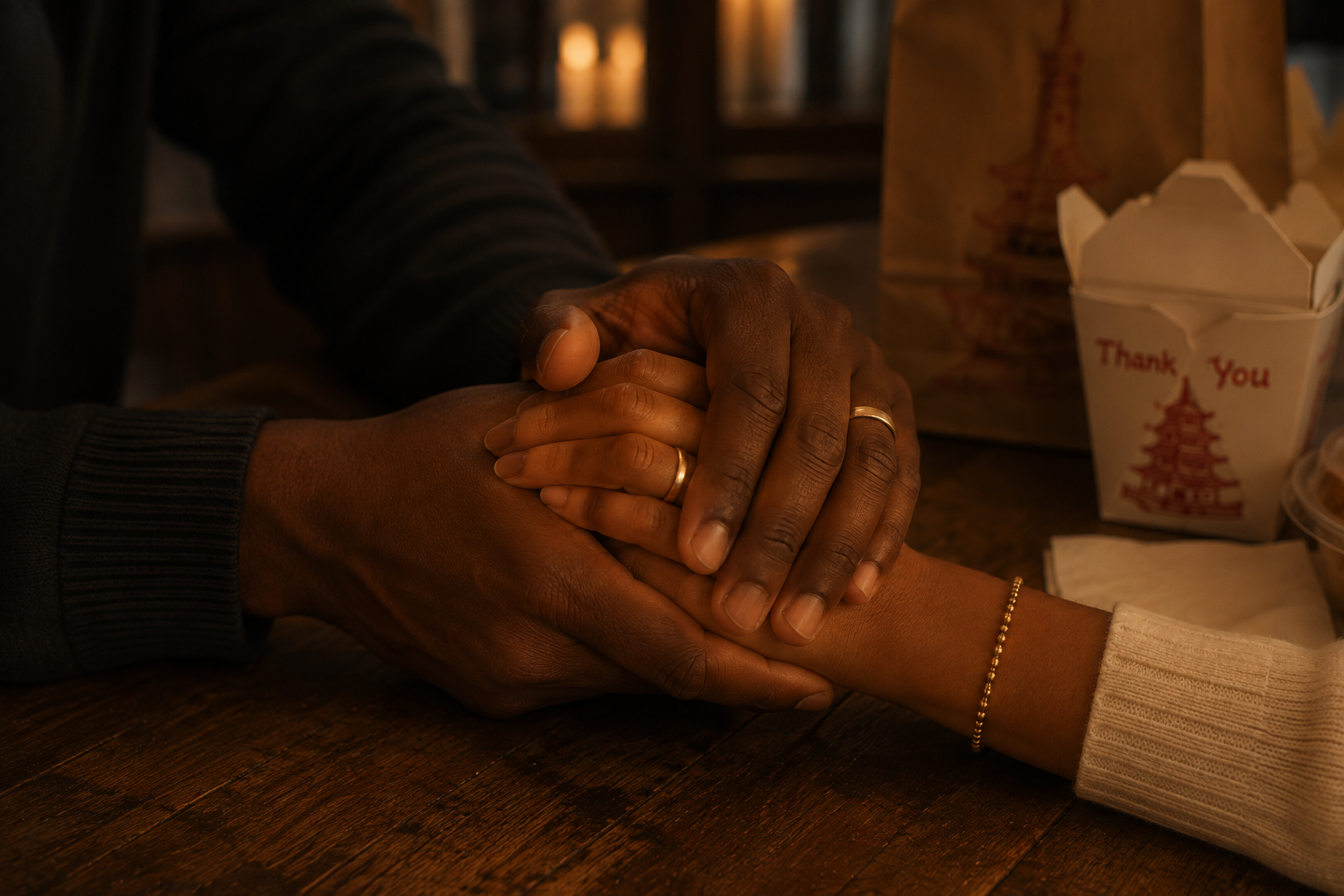
    So I rebuilt him. The Cedric in the book now has fear. He has anger, just never at Sam. He disagrees with her. They don’t argue — they have hard conversations that end in a decision, not a fight. He tells her when he’s not happy. And by the end of the book, he protects the house, literally.

    There’s a scene at the end of Chapter 11 that’s the clearest window into who he is. Sam is upstairs reading Birdie’s journal, learning that at the vibration site ceremonies, the men never entered the circle — they held the perimeter. Protectors, not participants. She hears Cedric come in downstairs, and it hits her: he’s been doing exactly that. Holding the line around her, securing her, without ever knowing what he was protecting her from. He didn’t need to know. That’s the moment she decides to show him the library.

    That scene is where I tied Cedric to the book’s larger architecture — Heart, Fire, Shadow, Wisdom, the postures the women in this family inherit and have to learn to balance. Cedric isn’t holding a stone. He’s holding the ground the stones sit on.

    I know some readers will read all this and think no marriage is that easy — that a husband who communicates, doesn’t obstruct, and quietly guards the perimeter without demanding explanation sounds more like a fantasy than a character. And it’s fair to sit with that reaction, because I wrote him partly as a demonstration, not just a description. So many of us walk around dysregulated, in relationships that aren’t balanced, without a clear picture of what balance actually looks like day to day. Sam recognizing Cedric’s protection in Birdie’s journal is the same recognition I want for the reader: the moment you realize someone has been quietly anchoring you, doing the work of showing up without asking what’s wrong, just being the shoulder you rest your head on after a hard day.

    If this book does nothing else, I want it to make readers ask: do I have that? Is someone doing that for me — or am I doing it for someone else without being asked?
  • What I Refused to Compromise On 

    What I Refused to Compromise On 

    What I Refused to Compromise On

    What I Refused to Compromise On

    If there’s one thing I refused to compromise on while writing Mirror Me, it was this:

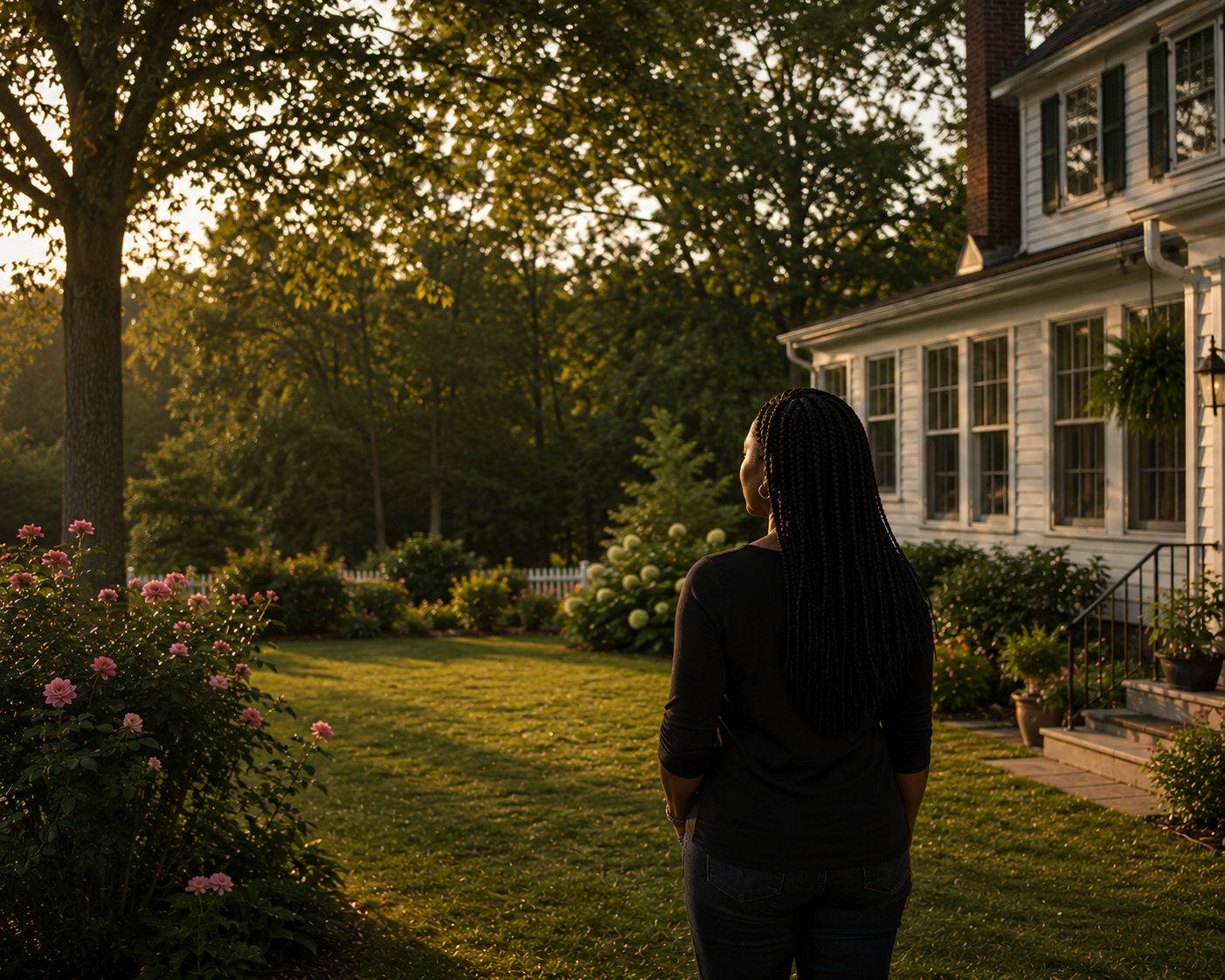
    This is a story about a Black family.

    The racial tension they experience is real, and it was important to me to write about it honestly. But it was equally important that this family not become another stereotype.

    When I was growing up, I lived in two very different worlds.

    On one side was Roosevelt, where we spoke with more slang, carried ourselves differently, and blended into the neighborhood around us.

    On the other side was Westbury, where my grandmother expected us to speak proper English, value education, and know how to carry ourselves in predominantly white spaces. She wasn’t trying to make us less Black. She was preparing us to survive in a world that often judged us before we ever opened our mouths.

    My sisters and I learned to code-switch very early.

    But that also meant we stood out.

    We were called names because we didn’t speak the way some of our classmates did. We didn’t always fit neatly into what people expected Black children to sound like or act like.

    That experience stayed with me.

    When I started writing Mirror Me, I thought about how many people like me rarely see themselves represented accurately in books, movies, or television.

    People who are fully Black, who understand Black culture, but who also learned to navigate predominantly white spaces.

    People whose experiences don’t fit neatly into the versions of Black life we’ve seen portrayed for decades.

    I wanted the Gaines family to feel like real people.

    Each member has a distinct personality. They don’t all speak the same way, react the same way, or see the world through the same lens. They’re proud of who they are, but I wasn’t interested in making them perform Blackness according to someone else’s expectations.

    For a long time, media treated Black characters as though they belonged in the same mold. The Black woman was the nanny. The Black man was the butler. Later, different stereotypes replaced those, but they were still stereotypes.

    Blackness is not a monolith.

    I didn’t attend an HBCU. I wasn’t part of a sorority. My husband wasn’t in a fraternity. Those experiences are part of Black culture, but they aren’t mine, and I wasn’t going to pretend otherwise.

    I wrote the family I know.

    The people I grew up with.

    The people who raised me.

    It was also important to me that the family be whole.

    At one point, I considered making Sam’s mother a single parent. Then I stopped myself.

    Why?

    Why couldn’t her parents still be married? Why couldn’t they simply be an older couple who had built a life together?

    There are enough stories that reinforce the stereotype of absent Black fathers. I didn’t want to contribute to that simply because it was familiar.

    I wanted to show a complete family.

    Not a perfect family.

    A complete one.

    And underneath all of this was another decision I’d made about the story.

    I refused to center whiteness.

    It exists in Mirror Me because it exists in life. Sam navigates racial tension, microaggressions, and assumptions people make about her. Those experiences are part of her world, and I wasn’t going to ignore them.

    But Mirror Me isn’t about white people.

    It isn’t about explaining racism.

    It isn’t about making white readers comfortable.

    It’s about a woman who happens to be Black, her family, her history, and the things she discovers about herself.

    I wanted readers to know the Gaines family as people first. To recognize their personalities, their relationships, their disagreements, and the love they have for one another.

    At the end of the day, that’s what I refused to compromise on.

    I wanted this family to be real.

    Human.

    Not a trope.

    Not a stereotype.

    Just people…

    …who happen to be Black.

    Mirror Me Launches February 2026

  • Why Birdie Became an Archaeologist 

    Why Birdie Became an Archaeologist 

    One of the questions I’ve been asked is why I made Birdie an archaeologist. 

    The simple answer is that Birdie needed to unlock the lore of the story. 

    Mirror Me has a long history behind it, and I didn’t want to spend hundreds of pages telling that history from beginning to end. Birdie became the vehicle that allowed both Sam and the reader to understand what came before without stopping the story to explain everything. 

    An archaeologist asks a simple question: 

    Who was here before us? 

    That’s exactly the question Birdie spends her life trying to answer. 

    She travels the world researching Indigenous peoples, ancient cultures, and places where the earth itself seems to hold memory. Through that research, she begins connecting what exists on Sam’s land with similar places around the world. Most people would never make those connections. They come through years of research, travel, documentation, and curiosity. 

    Birdie needed to be someone who was naturally curious. But curiosity wasn’t enough. She also needed the means to travel, the resources to spend years researching, and the freedom to dedicate her life to those questions. Because she never married and never had children, she was able to devote herself completely to that work. 

    In many ways, I think of Birdie as a female Indiana Jones. Not because she’s swinging from ropes or outrunning boulders, but because she’s driven by the same desire to understand the people who came before us and what they left behind. 

    More than anything, though, Birdie is a steward of memory. 

    She remembers her family. 

    She remembers the land. 

    She remembers the history that would otherwise be lost. 

    Her journals become the bridge between what was and what is. 

    They give Sam the information she needs without simply handing her the answers. Birdie is careful about what she records and careful about what she leaves for Sam to discover on her own. 

    From a storytelling standpoint, making Birdie an archaeologist also gave her credibility. When she writes about the vibration sites and the history behind them, the reader believes she has earned that knowledge. Her research makes the larger world of Mirror Me feel believable because it doesn’t begin with Sam. It has always existed. Birdie simply spent her life uncovering it. 

    One of the things I love most about Birdie is that, even though she never appears on the page in the present day, many readers tell me she’s one of their favorite characters. 

    I understand why. 

    She’s wise without being mysterious. 

    She’s plain-spoken without talking down to people. 

    She never pushes Sam toward the answer. She simply leaves the path lit and trusts her to keep walking. 

    In the end, Birdie isn’t just the catalyst for Sam’s journey. 

    She’s the steward of a story that has always belonged to the land. 


    Mirror Me Launches February 2027

  • Birdie Whittaker

    Birdie Whittaker

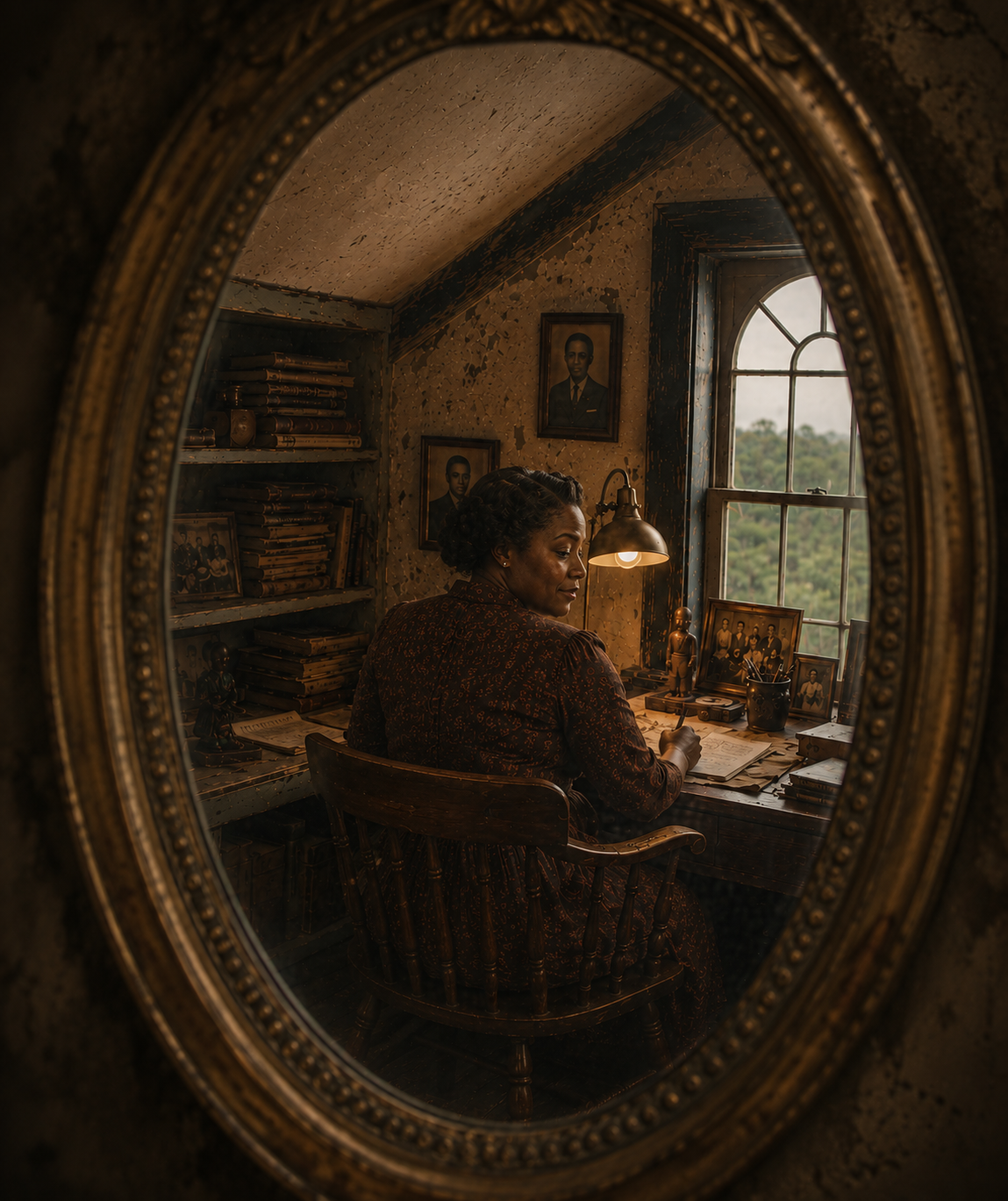
    Birdie Whittaker is one of the most amazing characters in Mirror Me. She became pivotal for me because she’s the bridge—between the history of the land and the house, and the present, where Sam is standing.

    A Life Spent Searching

    I imagined Birdie as someone who never let the world tell her who she could or couldn’t be. Always curious, always researching, always growing—almost an archaeologist, traveling the world to learn about different indigenous peoples and cultures. I sometimes think of her as a female Indiana Jones, minus the ropes and the whip. She never married because, in a real sense, she was married to the truth—to understanding what this world was built for and what the earth was trying to teach us about ourselves.

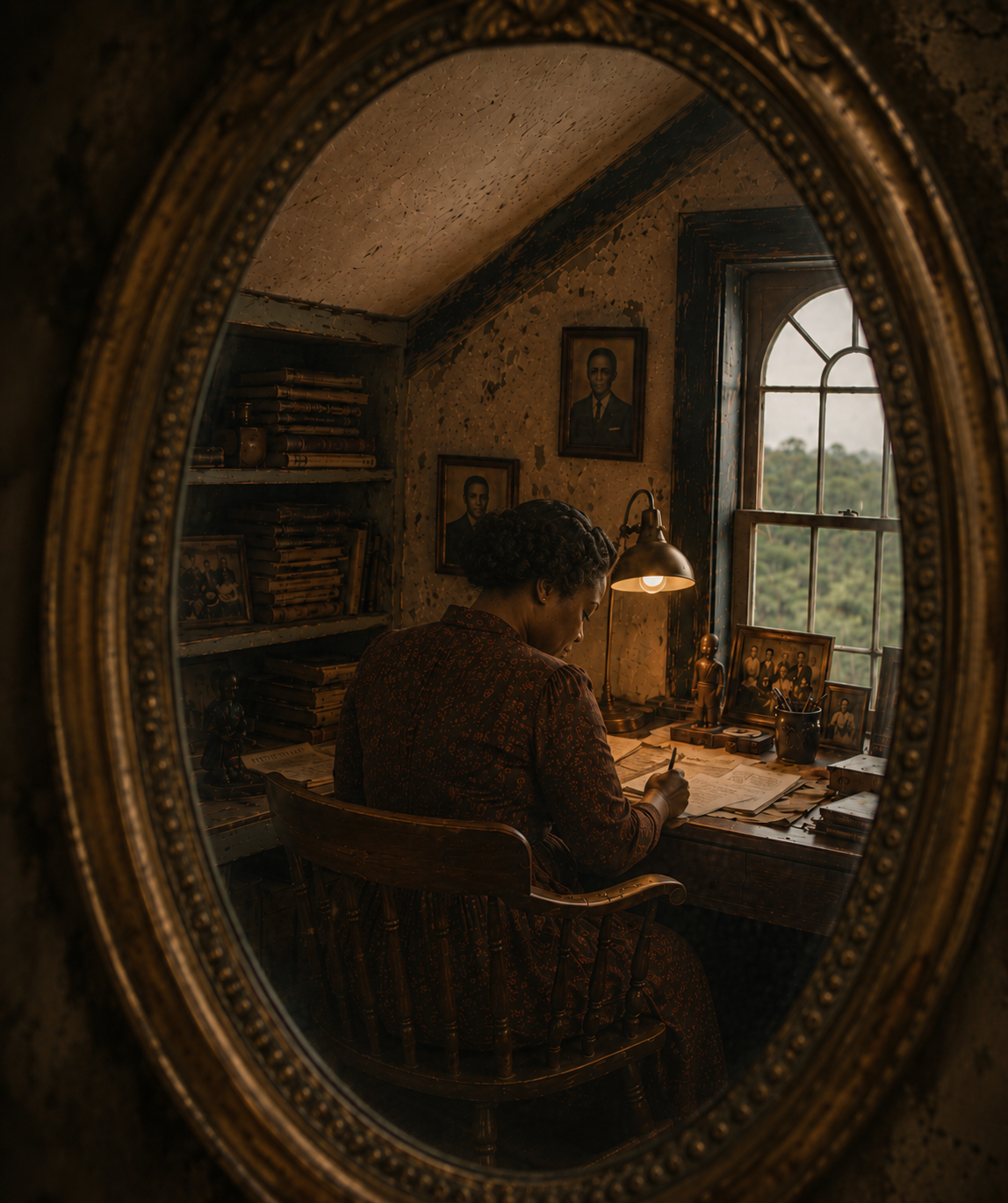
    What makes Birdie remarkable, however, is that she understood something was being lost if it wasn’t written down. She kept journals throughout her travels, documenting the vibration sites she discovered and learning how different cultures understood them. Over time, she began connecting the site on Sam’s land to places all over the world. She may never have completely cracked the code, but she devoted herself to understanding how it all fit together. Through those journals, we learn about Sam’s family, the land, the house, and even a little about ourselves.

    A Teacher, Not a Savior

    One of the things I love most about Birdie is that she never spoke in riddles. She was plain-spoken and straightforward, and she was careful about what Sam needed to know—and what she didn’t. Instead of handing Sam the answers, Birdie gave her the tools to discover them herself. She didn’t say, “Go here, push this, do that.” She opened the doors, left the path lit, and trusted Sam to find her own way.

    For me, Birdie is one of my favorite characters—not because she was perfect, but because she was fearless. She wasn’t afraid to live alone in the Whittaker house. She wasn’t afraid to stand up to the people who wanted to take the house and the land from her. Nor was she afraid to face the supernatural truth that lived within the property or to keep learning long after most people would have stopped.

    Carrying Truth Forward

    In the end, Birdie understood that what she was learning was bigger than herself and couldn’t be lost when her time on the land was over. Life experience only lasts as long as someone remembers it. The land has memory. The house has memory. But we have to be the ones who carry it forward.

    Because of that, Birdie documented everything. She kept journals, studied relentlessly, and researched until she was confident what she’d learned could survive beyond her lifetime. More importantly, she made sure it was ready to pass to Sam in a form that Sam could one day pass on herself.

    Birdie was a steward of truth. A researcher of life. A historian. She’s the adventurous spirit in all of us—the one who believes that writing something down, making it plain, and passing it to the right person can make all the difference in the world. She’s exactly the kind of person many of us aspire to be.


    Mirror Me launches February 2027