Category: The Author

  • What Am I Afraid Of?

    What Am I Afraid Of?

    What am I afraid of?

    I think it’s the same thing that keeps most people from taking a leap of faith.

    That they’ll fall.

    But if there’s one thing I’ve learned over the years about taking a leap and about falling, it’s that you can get back up.

    This venture of becoming a writer is something I’ve wanted for longer than I’ve even known my husband. There has always been something in me about storytelling. I’ve always felt it was there.

    I never really got the opportunity to pursue it seriously. I’m not mad about it. It just didn’t happen.

    And now, here I am in the second half of my life.

    What I’m afraid of…

    …is not being good enough.

    But I think that’s everybody’s fear, right?

    We don’t take chances because we’re afraid we’ll fail. We’re afraid we’ll fall flat.

    What I’m learning about life is that, yeah… it’s probably going to happen.

    There will be failures.

    There will be faux pas.

    There will be mess-ups.

    There will be slip-ups.

    But none of that means you don’t take a step.

    It doesn’t mean you don’t take the leap.

    Being afraid is part of the human condition.

    Walking into the unknown is part of daily life. We don’t know what’s going to happen from one day to the next.

    But if there’s a door to be opened…

    Walk through it.

    I’m learning that I’m walking into this afraid.

    And fear isn’t anything to be ashamed of.

    Fear is part of it.

    People say that Sam Gaines is brave.

    I don’t know that she’s brave.

    I think Sam Gaines is simply walking through the doors that are opening to her and seeing what’s on the other side.

    That’s how I’m walking into this whole era of being an author. This second act, whatever you want to call it.

    The doors of my mind opened up and allowed me to start writing again.

    I’m going to walk through them.

    Let’s see what’s on the other side.

    What am I most afraid of?

    Not walking through the door.
  • I’m Not Angry, I’m Thinking

    I’m Not Angry, I’m Thinking

    The thing people get wrong about me the most is that I’m angry all the time. I think it’s hilarious.

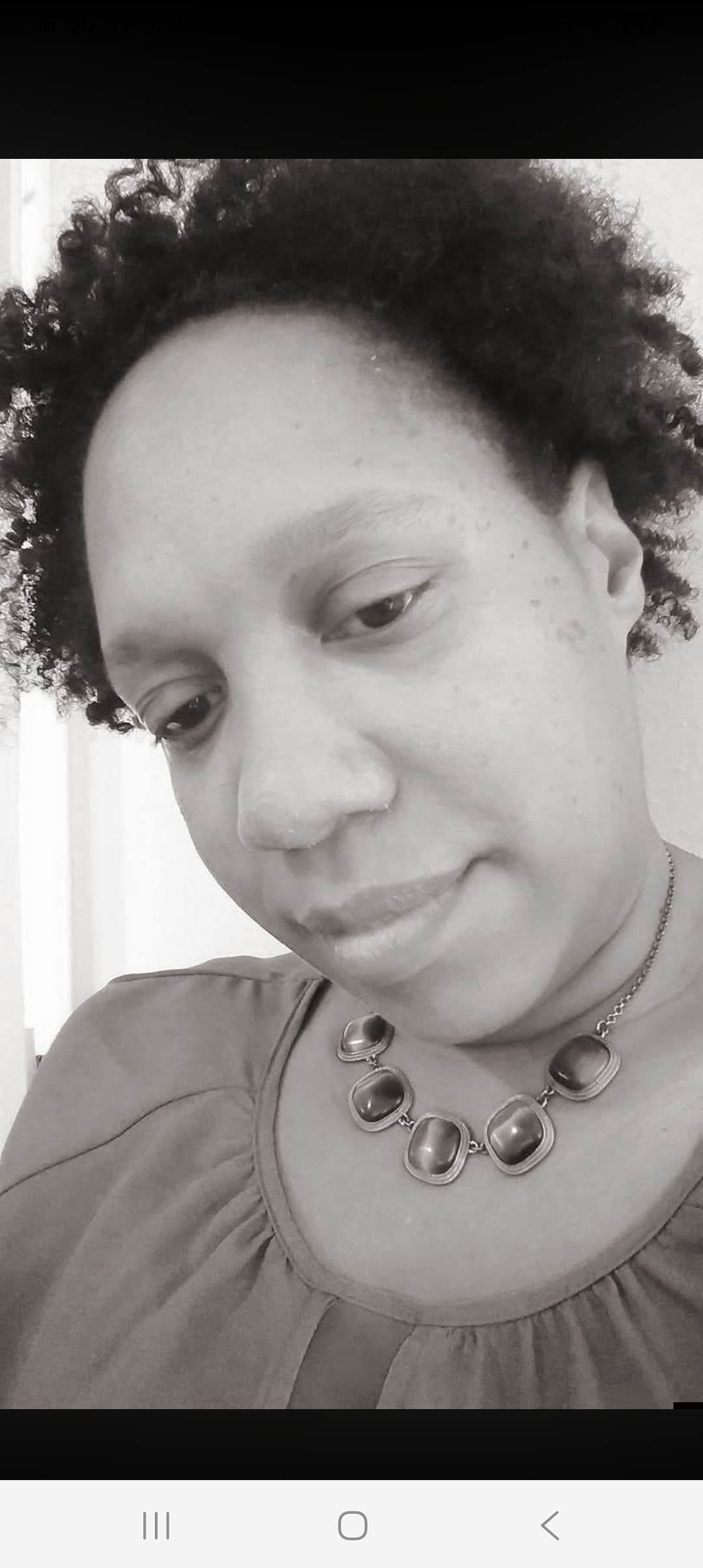
    I tend to be really introspective, and I guess sometimes that shows on my face. Maybe it’s just resting-you-know-what face. I don’t know. I take my time, and I’m thoughtful about how I want to say what I want to say. People often mistake that for me being angry or upset about something.

    I’m not.

    As I’ve gotten older, I want to really think about how I respond to things. So many people just spout off. They say whatever comes to mind without really considering the impact of what they’re saying or how someone else is going to respond. I’m processing all of that while I’m talking, while I’m thinking through what I’m going to say.

    I try to tell people, “I’m not angry. I’m just thinking.”

    Sometimes I talk very fast. Other times, when I’m processing, I slow down because I’m trying to find the right words to land in the conversation so they don’t come across the wrong way.

    I think people are always so quick to get to the end that they don’t take the time to think about the middle. I’m in the middle trying to process how to get to the end and have the right end to the conversation.

    That’s why I laugh about it. It really is the thing people get wrong about me the most.

    I get very passionate about what I believe in. I’m passionate about the things that excite me, and people often mistake that for aggression or anger. It’s not. It’s excitement. Maybe it’s the tenor of my voice. I don’t know. But I often find it hilarious that people think I’m angry when I’m just passionate.

    Weird how passion gets exchanged for anger.

    And I don’t just mean at work. I mean everywhere. I can be overly excited. I talk with my hands. People get nervous about that.

    It’s like, calm down, people. I’m just excited. I’m thoughtful.

    Maybe they need a mirror.

    I don’t know.

    Anyway…

    I’m just a passionate person.

  • In the Margins

    In the Margins

    Tell me what it’s like to be surrounded by people almost your entire life.

    It’s exciting. It’s busy. It’s fun.

    But it can also be a little lonely.

    What do I mean?

    When you’re around people all the time, you’re never quite alone. Some people can relate to that, and some people can’t. There’s a lot going on, and sometimes there’s so much happening in your mind that you don’t have room to express what’s going on in your head.

    I’ve always had tons of stories, tons of ideas, just random thoughts. I’ve learned to use little moments, like driving in my car or waking up in the middle of the night, to jot those ideas down. When you have a family of six, it’s really hard to find that time.

    I don’t mean that in a negative way.

    It’s just a busy life.

    Mother. Wife. Daughter. Sister. Friend. Employee. Business owner.

    Where do you find the time?

    Alone

    My time has always been stolen away in moments like this. Early in the morning. Leaving the house. Getting in the car and driving away.

    Honestly, the only time I really get to be one hundred percent alone is when I’m in the car by myself, usually on my way to work. I’m sure there are a lot of people who can relate to that.

    It’s my cone of silence.

    Even then, sometimes I don’t get the silence because my sister calls, or somebody needs something, and life keeps happening. There’s nothing wrong with any of that.

    Being alone gives you time to process.

    I had to learn how to adapt to those little minutes here and there and piece them together into hours of solitude.

    I’m going to tell you—I value my alone time.

    I don’t know about a lot of people, but I really enjoy being alone. I enjoy my own company.

    I used to joke that sometimes talking to myself was the only intelligent conversation I had all day. I know that’s a bit of an insult, but it’s true sometimes. When you get your thoughts out of your head, you can actually process them. If they just stay up there, it can be a lonely place to be.

    But when you genuinely enjoy who you are and who you’ve become, being alone is not a punishment.

    Being alone is a gift.

    My Time

    So how do I spend my alone time?

    Usually I’m writing. Taking voice memos. Dictating ideas. Talking to AI. I know that’s frowned upon by some people, but for me it’s a processing tool. Don’t get it twisted. It’s not about taking advice. It’s about getting a thought out of your head.

    Sometimes other people aren’t available to talk to.

    Sometimes I just need to decompress.

    And even when I say decompress, it’s not because something is wrong. It’s just that there’s a lot going on all the time.

    I’m a list person, so sometimes I’m dictating lists. I’m a planner, so sometimes I’m making plans. When I’m driving, it’s often the only time I have to just be still. You can’t exactly have a pen and paper while you’re driving, so I steal away into my car and spend some time alone with myself.

    Some people read.

    Some people go jogging.

    Some people sit at Starbucks with a cup of coffee.

    Being alone is cool, man.

    I love it.

    I love being alone because I enjoy spending time with myself. I spend that time writing or storytelling to myself, whether that’s into a voice memo, a Word document, or wherever those thoughts happen to land.

    How do I find the time?

    If I’m being real…

    I find it in the margins of my life.


    Mirror Me launches February 2027

  • Storyteller, Not a Writer

    Storyteller, Not a Writer

    I write. I have for most of my life. But I’m careful about which word I use for what I actually do, because I don’t think they’re the same thing.

    Writing keeps you enclosed in the words on the page. It doesn’t fully embody the story in and of itself. Storytelling is something else entirely — the voice, the pause before the reveal, the expression on your face while you’re telling it and on theirs while they’re receiving it. Honestly, I believe I tell a better story out loud than I write one down.

    The emotional experience

    There’s something about inviting someone into your emotional experience of a thing, in real time, that a page on its own can’t quite manage.

    I think that’s part of why certain kinds of content do so well now — people letting their reactions show alongside the story itself, not just reporting the words of it. Everyone responds to stimuli differently, and to me, storytelling is the act of pulling someone into your particular experience of a thing, not just the facts of it.

    So when people ask what I do, I don’t reach for “writer” first. Writing has rules, guardrails, requirements, and I follow them when the page calls for it. But storytelling is the thing that actually moves me — bringing someone along on the journey, not just describing where it went afterward. I put things down on paper. But I put myself in the category of storyteller, not writer.


    Mirror Me launces February 2027

  • She Has a Real Vivid Imagination

    She Has a Real Vivid Imagination

    My earliest memory of storytelling goes back to before I started school.

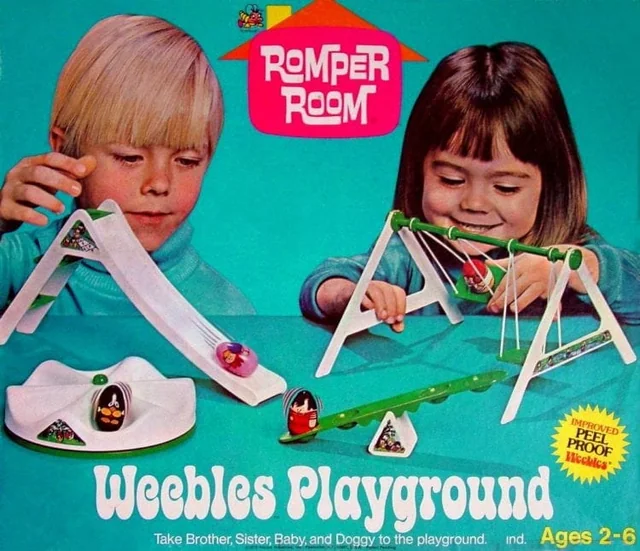
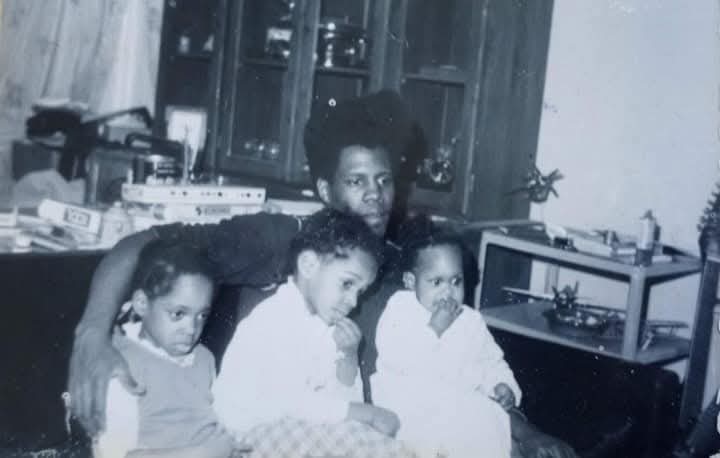
    I was at home on Pennywood with my mom, playing on top of the hi-fi with my Weebles. If you know anything about Weebles, you know the slogan: Weebles wobble, but they don’t fall down. I had Weebles, Little People, and a handful of other tiny characters, and I was taking them on an adventure across the top of that hi-fi.

    My mother was talking with someone in the background. I remember realizing they were watching me—that feeling when you know someone is looking over your shoulder. She stopped the conversation for just a moment and said, “She has a real vivid imagination.”

    I never forgot those words.

    At the time, I didn’t even know what they meant. I was probably three or four years old. But I never forgot the way she said them. Years later, when I understood what a vivid imagination was, I realized that what I’d been doing with those toys wasn’t simply playing.

    I was telling stories.

    Building Worlds

    Those little characters all had adventures. They came from somewhere. They were going somewhere. They had histories, personalities, and reasons for everything they did. Long before I knew what world-building was, I was already doing it.

    I was building worlds when I was knee-high to a grasshopper.

    Then I fell in love with reading.

    I carried around a thick anthology of Sherlock Holmes that contained nearly every story Arthur Conan Doyle wrote. It rarely left my side. I devoured The Count of Monte Cristo, The Call of the Wild, The Three Musketeers, and The Man in the Iron Mask. I loved stories filled with adventure and mystery—the kind that carried you somewhere and refused to let go until the final page.

    That’s when I realized there was something about living inside a story that spoke to me.

    Behind the Scenes

    Later, I joined theater, but I never wanted to be on stage. I wanted to work backstage. I wanted to build the sets. I didn’t need to stand in front of an audience—I wanted to help create the world they stepped into.

    In college, I studied media technology and filmmaking. Along the way, I wrote short stories and poetry. Writing was never an escape for me. It was simply another way my imagination explored the world.

    It Was Always There

    I still think about that moment when my mother paused her conversation just to watch me play.

    Not because she praised me.

    Because she recognized something before I ever could.

    She saw a little girl making up stories with a handful of toys and called it exactly what it was.

    A vivid imagination.

    It would take me another twenty years to understand she was right.

    Storytelling has always been in me.


    Mirror Me launches February 2027

  • Westbury

    Westbury

    The other neighborhood I grew up in on Long Island was Westbury.

    My grandmother lived there, about eight miles from Roosevelt, and the school system was significantly better than what Roosevelt offered at the time. Like any parent, my mother and father wanted the best for us. So when my sisters started school—and I followed behind—we all attended the Westbury school district.

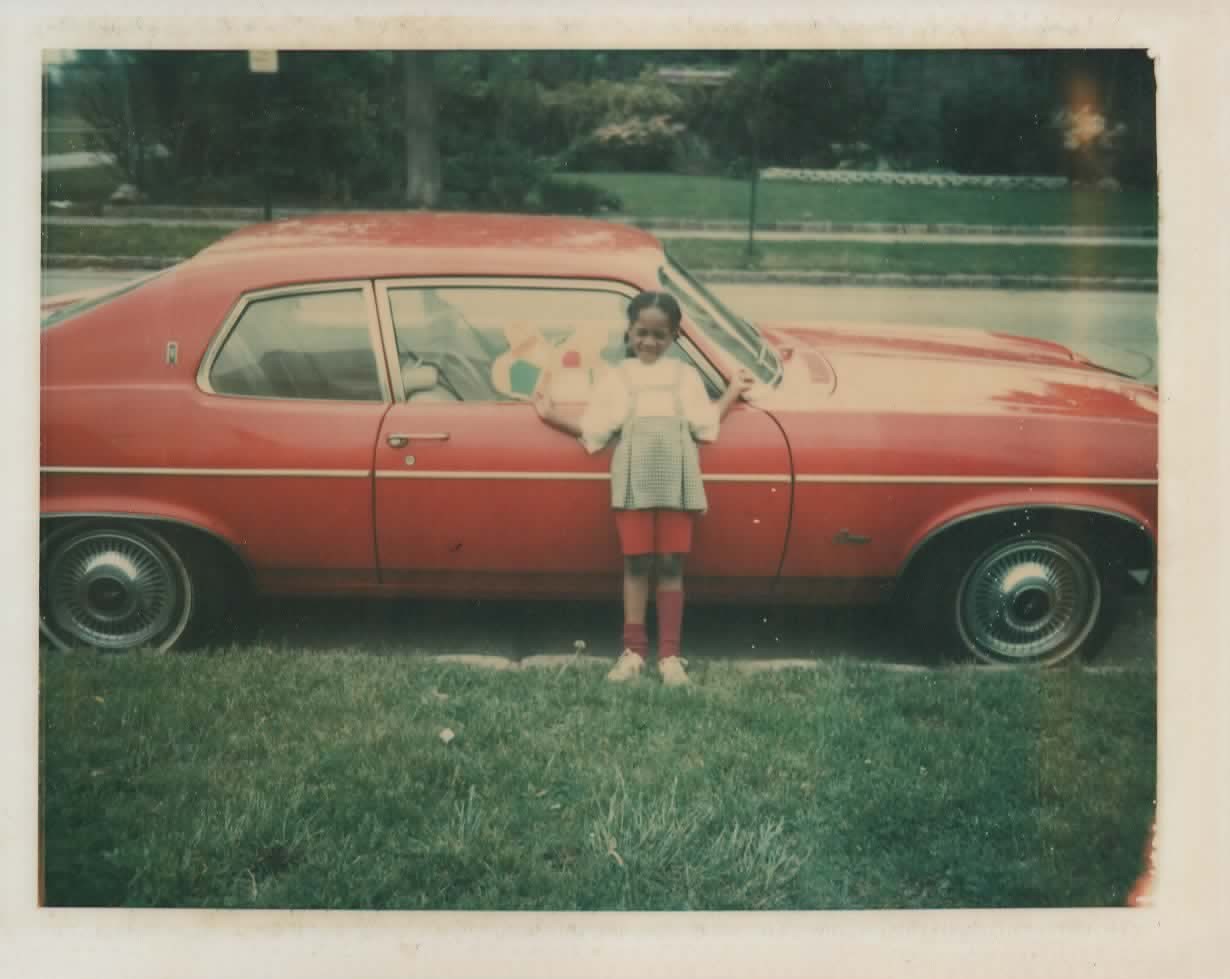
    Before I was old enough for school, we’d make the commute every morning. We’d pile into the red Omega at four or five o’clock, still half asleep in the back seat. My dad would sing the Superman theme to wake us up and get us laughing. He’d drive all the way to Bethpage, where we’d drop him off at Grumman Aerospace, and then Mom would take us to Westbury so my sisters could get ready for school.

    Two Homes

    Eventually, my parents made the difficult decision for my sisters and me to live in Westbury during the week and return home to Roosevelt on the weekends. Looking back, I can’t imagine how hard that must have been for my mother. But she knew her daughters were safe, cared for, and receiving the education she wanted for us.

    There was one rule: we weren’t allowed to tell anyone we lived in Roosevelt. Our place in the school district depended on Westbury being the only address that existed.

    The first address I ever memorized was 923 Broadway—my grandmother’s house. The first phone number I ever learned was hers. Westbury became our family’s home base, and in many ways, it remained that way until just a couple of years ago.

    Grandma’s House

    Living at my grandmother’s house felt completely different from Roosevelt.

    Grandma was proper. Orderly. She expected us to speak proper English, dress appropriately, and carry ourselves well in front of company. We understood the difference, and without realizing it, we learned to move comfortably between two different worlds. Looking back, it was probably my first lesson in code-switching. Not as something negative, but simply as understanding how to present yourself in different spaces.

    Creativity, however, was never discouraged. It simply took a different shape. It was quieter. More contained. My grandmother dedicated the basement to our play space—a place where we could explore, imagine, and create.

    Before I started school, I’d stand at the second-floor window and watch the nursery children playing in the yard below. I couldn’t understand why I wasn’t down there with them. So I built my own world instead. I’d string yarn across my room, create acrobats to balance on it, and invent entire worlds for my toys to explore. I played that way—building stories and narrating adventures—until I was thirteen.

    Home Base

    The thing I remember most about my grandmother’s house is that we never came home to an empty one. She was always there. There was always a meal waiting. There was always someone to greet us at the door.

    If you’ve never had a home base, it’s difficult to explain what it means to lose one.

    Growing up between Pennywood on the weekends and Westbury during the week meant living in two different worlds. I had two sets of friends, learned two different ways of moving through life, and carried two versions of myself.

    Yet beneath both of them was someone else entirely.

    The real me loved being alone. It took me until adulthood to understand that. At the time, I only knew that the hours spent by myself—riding my bike, standing at a window, or building entire worlds out of yarn—were the moments when I didn’t have to perform either version of myself.

    I could simply be the one underneath.


    Mirror Me launches February 2027

  • E. Pennywood Ave

    E. Pennywood Ave

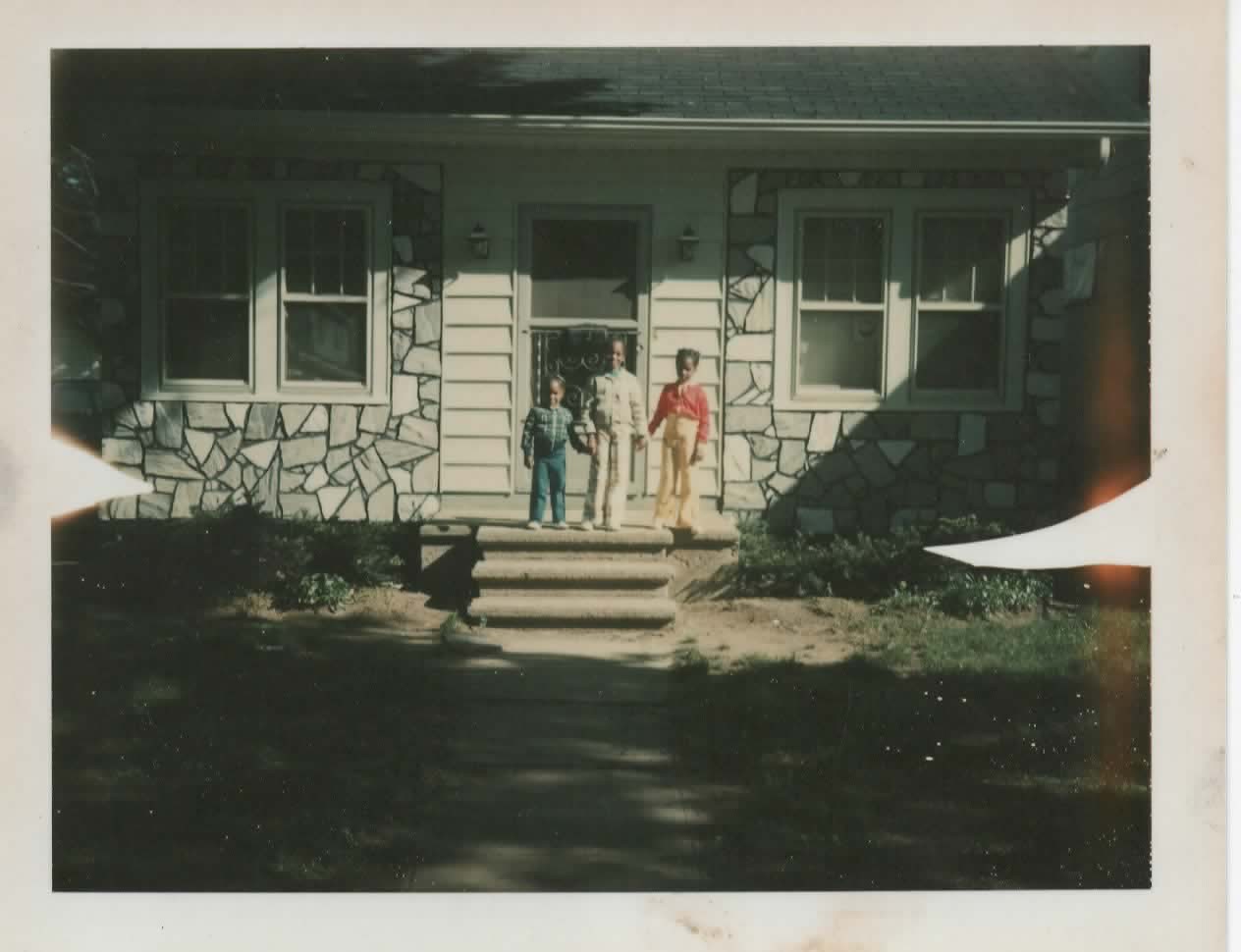
    Growing up on Long Island, I lived in two distinct neighborhoods—Roosevelt, New York, and Westbury, Long Island. In Roosevelt, we lived on a street called Pennywood Avenue. East Pennywood Avenue, to be exact.

    The neighborhood was everything you’d imagine the eighties to be. Kids on bikes. Playing in the street, yelling “Car!” every time someone came down the road. Riding to the park as a group. Running across the street to play with your friends without thinking twice.

    I was more of a tomboy than anything else.

    There’s a story I still tell about a kid who came to the block and wanted to play but wouldn’t give us back the ball. I tussled with him, snatched it right out of his hands, and after that I was the tough girl on the block. I hung with the boys across the street, played dolls with the girls next door, and wasn’t afraid of much.

    I used to ride my bike into the woods—and yes, there were woods in Roosevelt. I’d explore trails that wound behind neighborhoods, figuring out different ways to get from one place to another. It took me until I was twelve to learn to ride a bike, which is funny, but once I did, I disappeared for hours. Just exploring. Just seeing where things led.

    The little work crew

    Built around 1910, our house was a tiny brick home with gray stucco across the front. The main floor held two bedrooms, a bathroom, a kitchen, and a living room. My two older sisters and I shared one small bedroom with bunk beds that had no guard rails. Falling out in the middle of the night was simply part of growing up.

    Eventually, my dad decided we all needed our own rooms. The only place to build them was the attic, so he hired his three daughters as his construction crew. We learned how to hang paper tape, spread spackle, swing a hammer, and drive a nail. Three girls building their own bedrooms alongside their father.

    That wasn’t unusual in our house.

    Inside, there was always something being made. Science fair displays. Halloween costumes. Art, music, model homes—if we could imagine it, my parents made sure we built it. They taught us that creativity begins with imagination, but it becomes real when you’re willing to put your hands to the work.

    Pennywood is one of the places where I felt most at home being exactly who I was. Creative. Free. Rough around the edges. Unafraid to explore.

    Living on Pennywood taught me that it was okay to imagine.

    And I love that.


    Mirror Me launches February 2027.