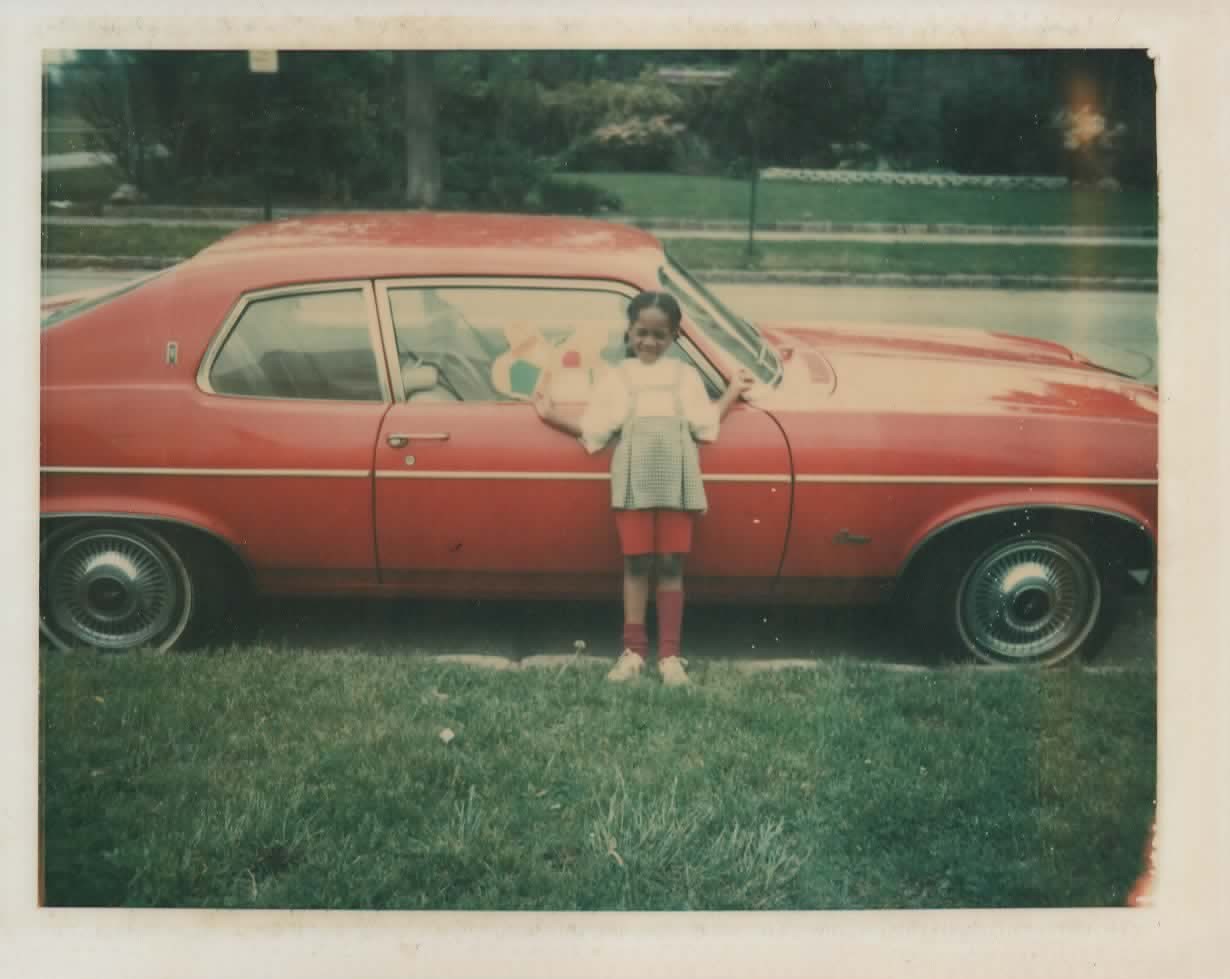
The other neighborhood I grew up in on Long Island was Westbury.
My grandmother lived there, about eight miles from Roosevelt, and the school system was significantly better than what Roosevelt offered at the time. Like any parent, my mother and father wanted the best for us. So when my sisters started school—and I followed behind—we all attended the Westbury school district.
Before I was old enough for school, we’d make the commute every morning. We’d pile into the red Omega at four or five o’clock, still half asleep in the back seat. My dad would sing the Superman theme to wake us up and get us laughing. He’d drive all the way to Bethpage, where we’d drop him off at Grumman Aerospace, and then Mom would take us to Westbury so my sisters could get ready for school.
Two Homes
Eventually, my parents made the difficult decision for my sisters and me to live in Westbury during the week and return home to Roosevelt on the weekends. Looking back, I can’t imagine how hard that must have been for my mother. But she knew her daughters were safe, cared for, and receiving the education she wanted for us.
There was one rule: we weren’t allowed to tell anyone we lived in Roosevelt. Our place in the school district depended on Westbury being the only address that existed.
The first address I ever memorized was 923 Broadway—my grandmother’s house. The first phone number I ever learned was hers. Westbury became our family’s home base, and in many ways, it remained that way until just a couple of years ago.
Grandma’s House
Living at my grandmother’s house felt completely different from Roosevelt.
Grandma was proper. Orderly. She expected us to speak proper English, dress appropriately, and carry ourselves well in front of company. We understood the difference, and without realizing it, we learned to move comfortably between two different worlds. Looking back, it was probably my first lesson in code-switching. Not as something negative, but simply as understanding how to present yourself in different spaces.
Creativity, however, was never discouraged. It simply took a different shape. It was quieter. More contained. My grandmother dedicated the basement to our play space—a place where we could explore, imagine, and create.
Before I started school, I’d stand at the second-floor window and watch the nursery children playing in the yard below. I couldn’t understand why I wasn’t down there with them. So I built my own world instead. I’d string yarn across my room, create acrobats to balance on it, and invent entire worlds for my toys to explore. I played that way—building stories and narrating adventures—until I was thirteen.
Home Base
The thing I remember most about my grandmother’s house is that we never came home to an empty one. She was always there. There was always a meal waiting. There was always someone to greet us at the door.
If you’ve never had a home base, it’s difficult to explain what it means to lose one.
Growing up between Pennywood on the weekends and Westbury during the week meant living in two different worlds. I had two sets of friends, learned two different ways of moving through life, and carried two versions of myself.
Yet beneath both of them was someone else entirely.
The real me loved being alone. It took me until adulthood to understand that. At the time, I only knew that the hours spent by myself—riding my bike, standing at a window, or building entire worlds out of yarn—were the moments when I didn’t have to perform either version of myself.
I could simply be the one underneath.
Mirror Me launches February 2027